
Solving the Schism: Empire and Papacy in the vortex of change, 1378–1417
 23. 4. 2026 – 24. 4. 2026
 Academic Conference Centre, Husova 4a, Prague 1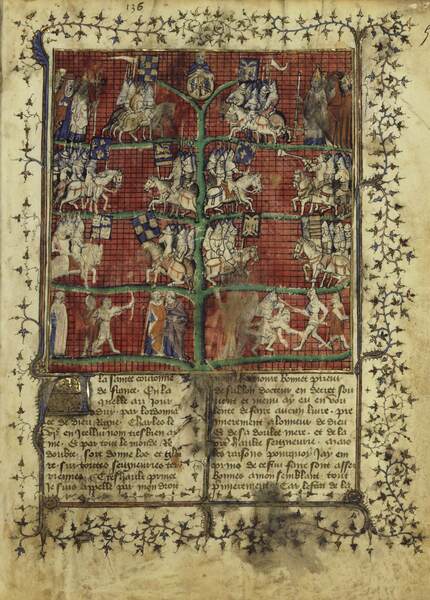
The international conference “Solving the Schism: Empire and Papacy in the vortex of change, 1378–1417”, organised by the Institute of History of the Czech Academy of Sciences in collaboration with the University of Liège and the University of Minho, will take place on 23 and 24 April 2026 at the Academic Conference Centre (Husova 4a, Prague 1).
It is supported by the Czech Academy of Sciences’ Strategy AV21 research programme, “Anatomy of European Society, History, Tradition, Culture, Identity”, the Fund for Scientific Research (F.R.S.–FNRS, Belgium) and the Associate Laboratory for Research and Innovation in Heritage, Arts, Sustainability and Territory (IN2PAST, Portugal).
This international and interdisciplinary conference will examine the various proposals and initiatives for resolving the Great Western Schism (1378–1417), arguably the most significant spiritual and temporal crisis of the later Middle Ages (c.1300–1500). The proposed solutions included diplomatic negotiations, dynastic alliances, conciliar and reformist ideas, and military operational plans. We shall investigate how these were conceived, justified, expressed, and communicated through the textual, visual, spatial, and sonic media of the time.
The Schism grew out of an intricate web of religious, political, and cultural rivalries. The Emperor and the King of France pursued diverging policies with regard to the Papacy. Popes and cardinals in turn kindled the division of Western Christendom by creating competing systems of obedience. The Schism lasted for almost 40 years and was finally resolved by the Council of Constance in 1417. Some long-established truths that were fundamental to the medieval world were irreversibly shattered during this period, notably the unity of Western Christendom and the universal authority of the imperial and the papal dignities. The Schism newly polarised existing conflicts and wrought havoc with established political processes; it put into jeopardy the long-term efforts of the Luxembourg dynasty to preserve the imperial throne for their members (the so-called ‘hegemony of the Luxembourg dynasty’ in the Holy Roman Empire), and did the same to the project of reconciliation between France and England after the death of Edward III (1377). It also associated temporal polities with specific popes and encouraged the subtraction of obedience, thus depriving any of the two – and, from 1409, of the three – contemporaneous papacies of the role of universal European arbiter claimed by the papacy in previous centuries. In the temporal domain of the Pontiff, the Papal States, local lords and the more powerful among the papal cities took advantage of the unstable circumstances to reduce the political control of their overlords.
The situation gave rise to a significant production of treatises and pamphlets, in which solutions were being proposed, as well as specific artistic expressions that highlighted and disseminated the religious, cultural, and political claims and programmes of the parties involved. Universities, clerics, and nobles associated with the King of the Romans, the King of France, and the aspirant Popes proposed various peaceful or military projects and measures to put an end to the Schism. Among the temporal rulers of Western Christendom, the head of the Holy Roman Empire was by virtue of the imperial office the first to be called upon to resolve the schism. Crowned by the Pope, he represented universal temporal power. In 1378, however, Emperor Charles IV had just died and his seventeen-year-old son Wenceslas had only been crowned King of the Romans; his impending coronation by the Pope was contingent on the resolution of the Schism, opening up the Luxembourg dynasty to political challenges by their rivals, in particular the Wittelsbachs. How exactly the Holy Roman Empire, the papacies, and France navigated the complex situation and attempted to resolve the Schism while asserting their respective political importance, both on a diplomatic and military level, therefore remains an open question. What is widely known constitutes only the tip of the iceberg; the full complexity of European politics during the Schism remains relatively underexplored, leaving a full inquiry into the cultural and political dynamics of the Schismatic period open for investigation.
Contact:
Jana Fantysová Matějková
Institute of History of the Czech Academy of Sciences
fantysova@hiu.cas.cz
Christophe Masson
F.R.S.–FNRS / University of Liège
christophe.masson@uliege.be
Members of the conference committee:
Éric Bousmar (UCLouvain Saint-Louis Bruxelles)
Jana Fantysová Matějková (Czech Academy of Sciences)
Mário Sérgio Silva Farelo (University of Minho)
Alexandra Gajewski (Burlington Magazine)
Karl Kügle (University of Oxford)
Christophe Masson (F.R.S.-FNRS / University of Liège)
Popiska k obrázku:
Honoré Bovet, L’Arbre des batailles, Paris, BN, ms. fr. 1266, f. 5r; Copyright Bibliothèque nationale de France
23. 4. 2026 – 24. 4. 2026
Academic Conference Centre, Husova 4a, Prague 1 